
Check out our Healing Center
·
Check out our Healing Center ·

#FindYourLine
In our communities, care has always been something we practice together, not something we figure out alone. The #FindYourLine campaign gives people a way to work through these moments instead of dismissing them, and supports people with language and permission to notice, speak up, reflect, and show up for each other before interactions reach a point of crisis.
Gray areas are moments in interactions with others that don't fit neatly into "this was fine" or "this was wrong". Nothing clearly crosses a line, but something still feels off. They're easy to brush aside because they don't look like behaviors we're taught to watch for—but they matter, and they can lead to harm.

Phase 1: Noticing
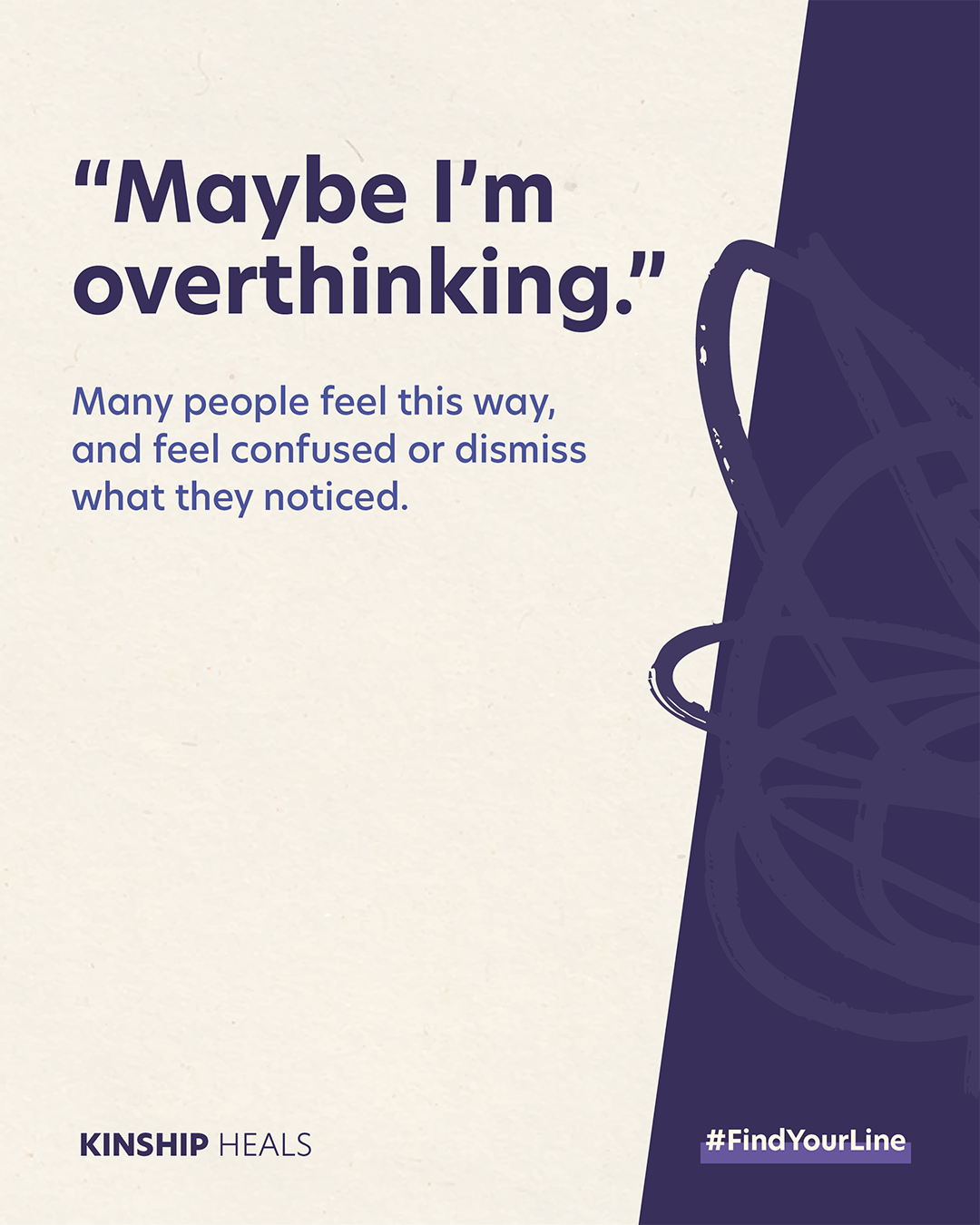
The first step in trusting yourself is learning to notice: not judging, not deciding, not reacting, just noticing. Before you can figure out what to do about a situation, you have to let yourself register that something feels different. It might be a tight stomach, a hesitation before you reply, or a sense you can't quite put into words yet. That's okay. Noticing is a skill, and like any skill, it gets easier the more you practice it.



-
When you get regular messages on your social media from an older man you recognize from the Indian Health Clinic, your stomach tightens.
You don't know him well.
You two have never spoken outside the clinic.
Nothing “bad” has happened.
But now, every time you go in for services, your body fills with dread.
These are the moments that aren’t clearly right or wrong, but they still leave you feeling uncomfortable.
If you’ve ever felt like this, that matters.
-
An older tribal member reaches out through social media and invites you to dinner.
They say they want to talk, but don’t explain.
When you ask what it's about, they tell you to “just come”.
They choose an expensive, five-star restaurant.
All of this feels confusing and uncomfortable, so you say no.
These kinds of feelings are common.
Many people have them when expectations are unclear or when something feels mismatched.
Trusting your gut isn't rude or disrespectful—it’s about being aware and taking care of yourself.
-
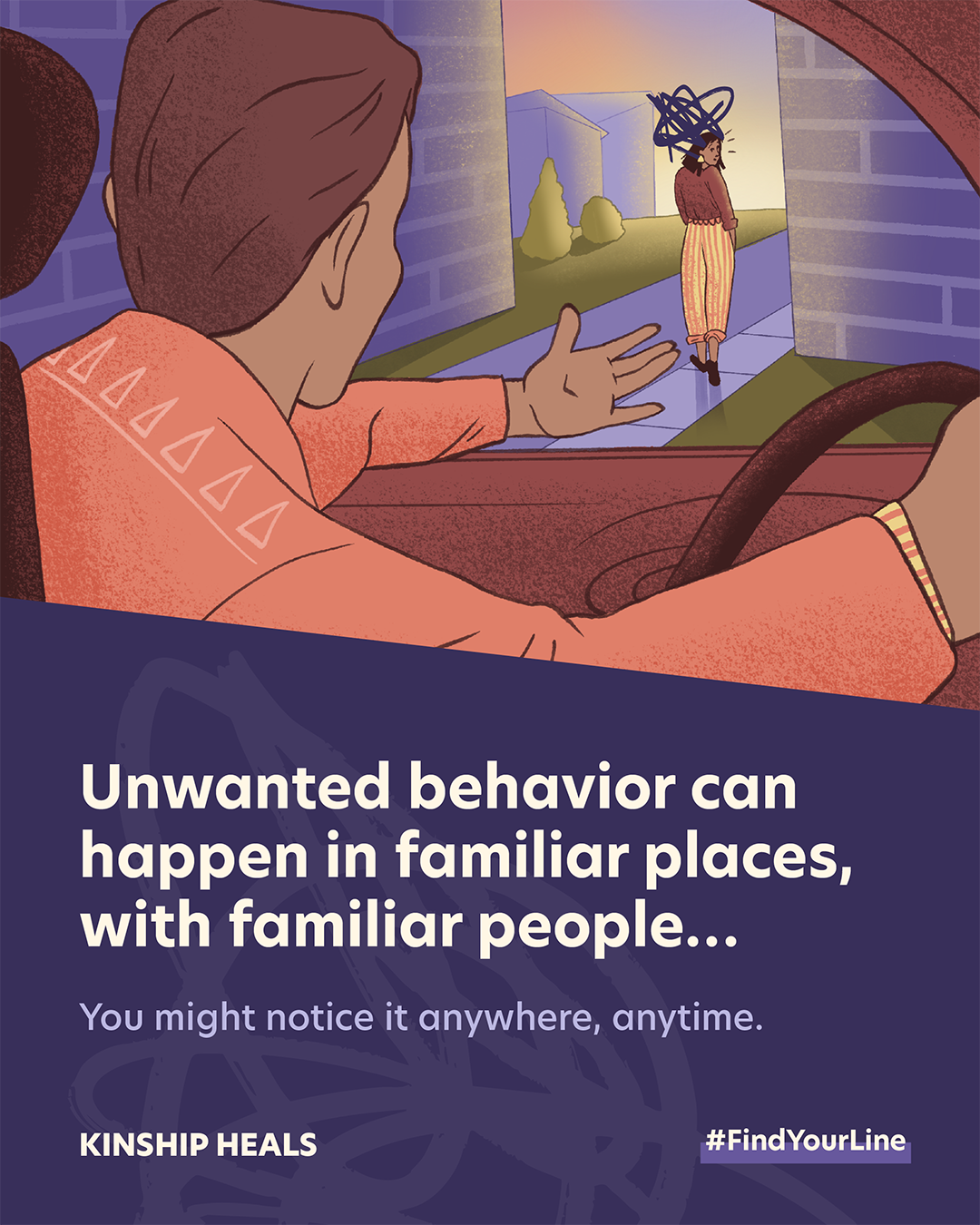
A community volunteer insists on driving you home after events, even after you say you’re fine.
They keep offering, joking that they “won’t take no for an answer.”
The first time seemed fine, but when it keeps happening, you find it weird.
When someone keeps insisting on engaging with you even after you’ve said no, you might notice a shift in how you relate, a need to explain yourself, or a feeling you didn’t expect.
Noticing this behavior doesn’t only happen in extreme situations.
It often happens in everyday places and with people we recognize.
It's common, and it's okay.
-
A mentor starts texting you late at night; it seems normal at first, as if they're just checking how your studying is going. Then the conversations drift away from the original reason for connecting.
It begins as a feeling and then slowly becomes clearer. It isn’t only about what’s said. It’s also about when, how, and where something happens.
A situation can change in small ways—timing, tone, expectations—and your body may respond before you understand why.
This shift from how you feel inside to situational awareness happens naturally for many people.
Noticing patterns isn’t about assuming what someone intends.
It’s about paying attention to context.
Your feelings about a situation can change anytime.
-
Within minutes of each post you make, he always has a reaction or comment.
Every time the notification pops up, your shoulders tighten.
You wonder if it's just a coincidence that you're both online, or if he's digitally stalking you … or if there even is such a thing. Feeling like someone's watching every move you make makes you think twice about every pic you post.
But you also worry you're being judgmental, or even paranoid.
When someone’s behavior changes or crosses a line, you can’t quite explain, self-doubt often follows.
Maybe the person doesn't mean any harm.
Maybe it’s just their personality and you're reading too much into it.
Self-doubt is common, especially when you’re taught to be polite, respectful, or grateful for attention.
Questioning yourself doesn’t mean your feelings aren't real.
It means you’re trying to make sense of them.

Phase 2: Naming
Once you've noticed something feels off, the next step is putting words to it: not the perfect words, and not a final verdict on what happened, just language that helps the feeling make a little more sense. Naming something doesn't mean you're accusing anyone or claiming to know the full story. It just means you're no longer carrying the confusion alone.




-
Something happens with someone at the community building and it just doesn't sit right. Everyone's supposed to be family, but it felt uncomfortable.
You replay what happened later. Nothing “bad” happened, and no lines were clearly crossed. But something about it stayed with you.
You wonder if you’re making too much of it … then again, maybe you're not.
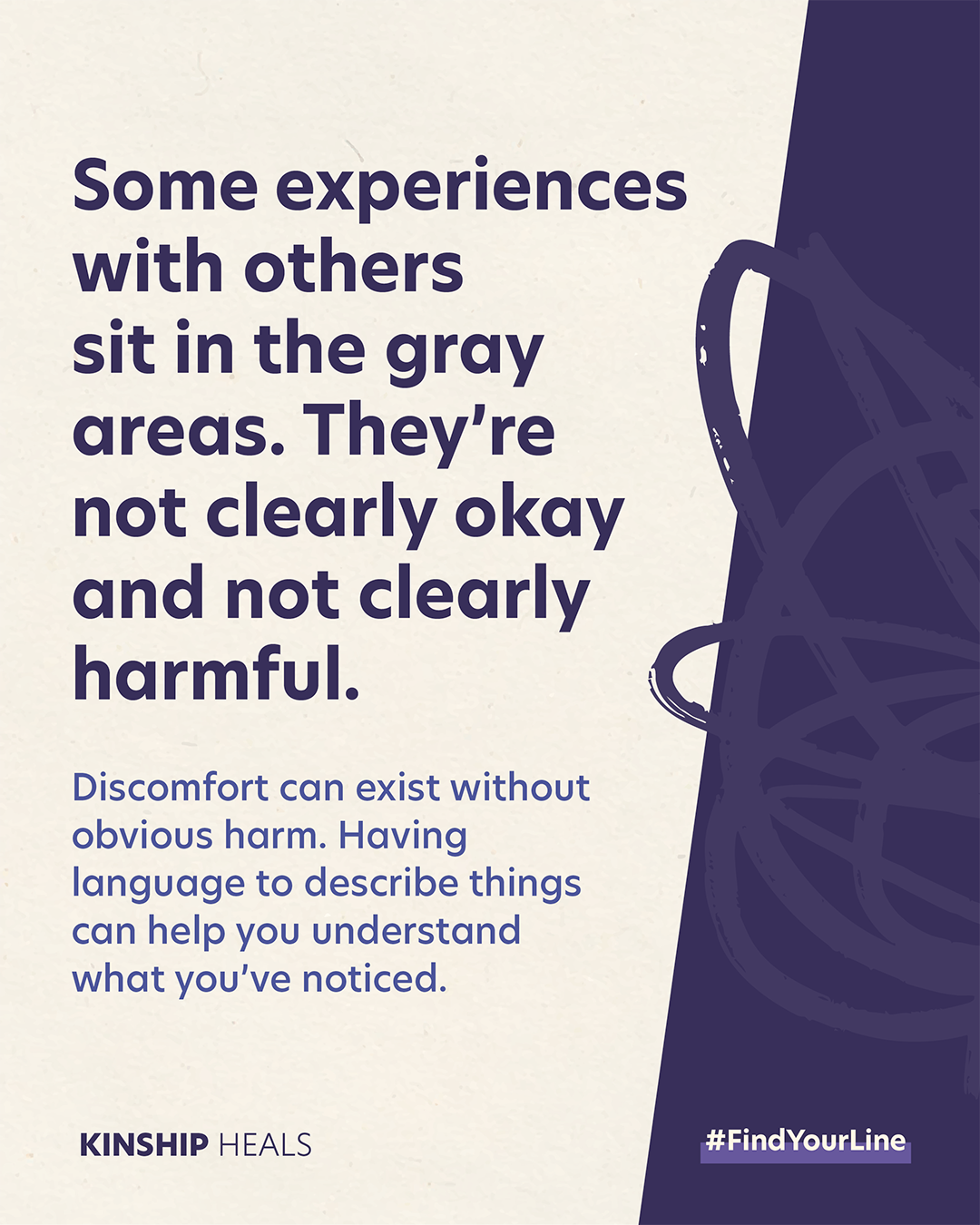
Some experiences aren’t clearly okay. But they’re not clearly harmful either.
Having words for moments like these doesn’t mean blaming someone, and it doesn’t mean deciding what was really going on.
It simply helps you make sense of what you noticed.
-
You are in recovery and your partner keeps encouraging you to go to events where other people are using substances you don’t want to attend. They insist it will be good for you to see old friends, and they don’t seem to hear you when you say no.
You feel sad because you know they care, you’ve been together for a long time, and this wasn’t how it used to feel. You wonder if you’re being difficult or ungrateful.
Sometimes pressure shows up in relationships that involve care and history. But that doesn’t make the discomfort disappear.
Naming moments like this isn’t about excusing someone’s behavior or assuming good intentions.
Pressure can be harmful, and sometimes it’s used deliberately to maintain control.
Recognizing this helps make sense of why something that’s framed as “support” can feel heavy instead.
Discomfort matters, regardless of the reason behind it.
-
An adult you know greets you with a hug. At first, you brush it off since they’ve always been friendly.
But each time you see them, the hug lasts a little longer, their hand stays on your back, and they don’t let go right away. You start to feel uncomfortable and try to step away sooner.
Each hug on its own feels hard to explain. But together, they change how safe and comfortable you feel.
This is where naming patterns can help. Many gray-area experiences aren’t about one moment—they’re about repeated behaviors that build over time.
Some patterns are used to push boundaries, while others may come from a lack of awareness.
Naming the pattern helps explain why something feels off and why safety and comfort can change over time.
-
After an appointment with the doctor, you keep thinking about it.
The doctor didn’t say anything clearly inappropriate but they asked personal questions that felt unnecessary, and they stood closer to you than you expected.
Later in the day, the moment keeps replaying in your mind. You wonder if you imagined it and if you should have reacted differently.
When you begin to learn that some experiences are considered gray-area behaviors, something shifts.
You’re not trying to prove anything.
You’re not deciding what it meant.
But having words helps you understand why the moment stayed with you. Naming can quiet the replay—not by giving answers, but by making things clearer.
-
Your friend mentions a moment that made them uncomfortable—a comment, a look, a touch that lingered too long.
As they describe it, something clicks. You’ve felt that too. You just never had words for it.
The words we use to describe things don't come out of nowhere. They exist because many people notice similar moments quietly, often alone.
Naming helps people realize they’re not isolated in their experience.
It turns private confusion into shared understanding.
You don’t have to share your whole story to know you’re not alone. Just naming it can help.

Phase 3: Reflecting
Naming a feeling is one thing, understanding it is another. Reflecting is about slowing down and asking what actually happened, and what it meant—on both sides. It isn't about deciding who's right or wrong, and it isn't about assigning blame. It's about holding space for the fact that intention and impact don't always match. Someone can mean no harm and still cause it, and both realities can be true at the same time. This kind of thinking takes time, and there's no rush to get to an answer.
-
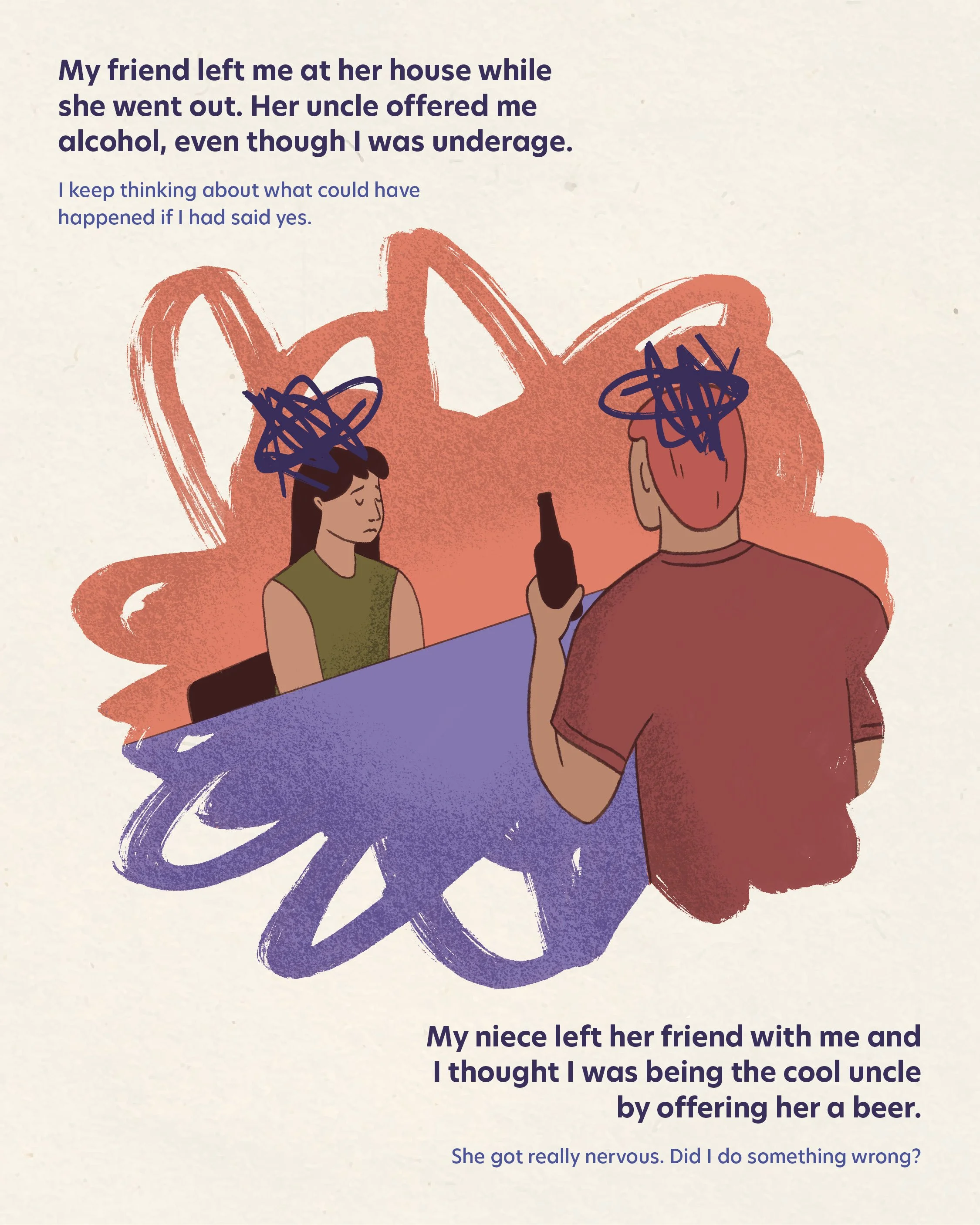
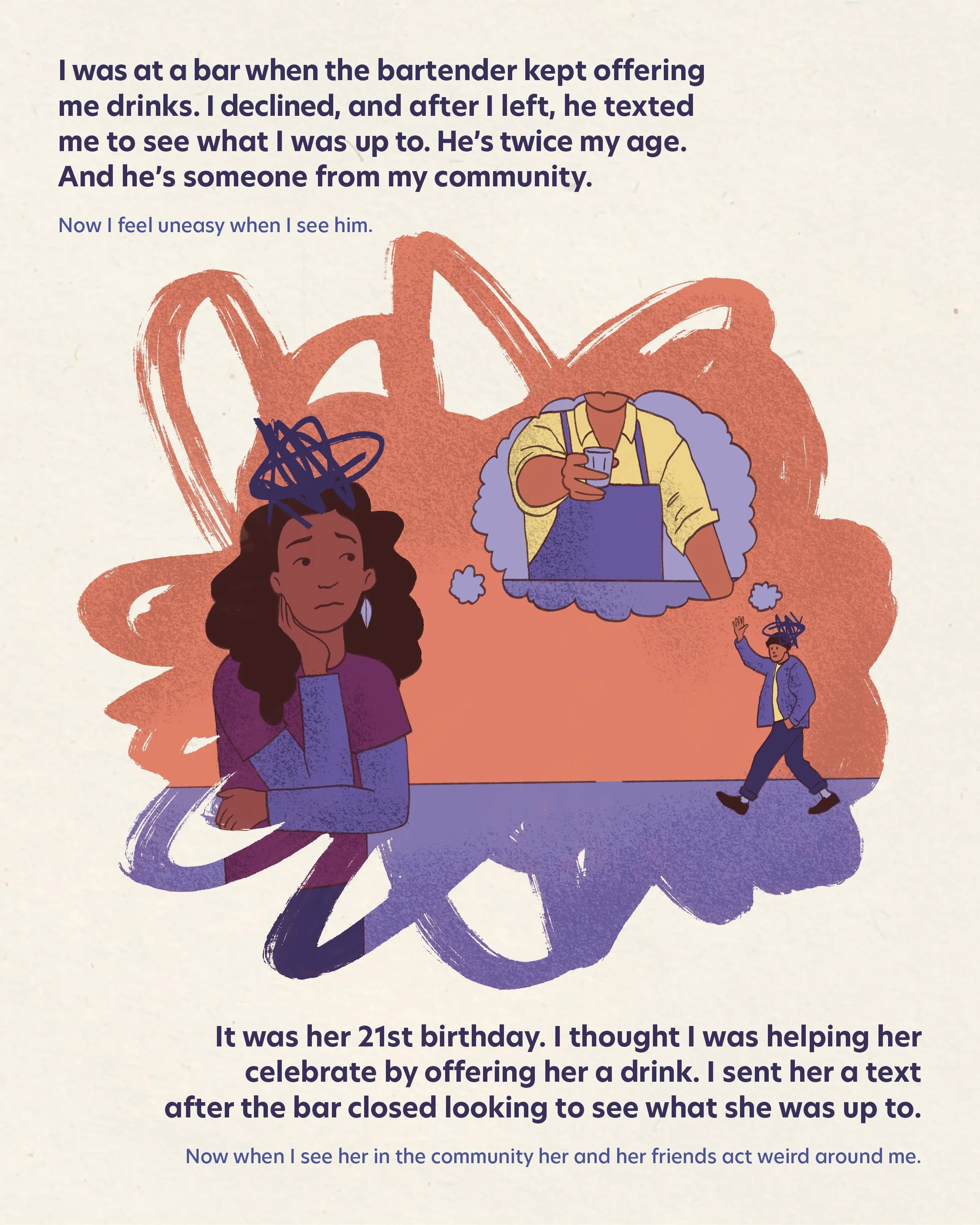
While some might see it as a sociable gesture, providing alcohol to someone underage is a known tactic used to create vulnerability.
It lowers defenses and increases the risk of sexual harm.
Reflection helps us understand the impact of someone's behavior instead of just the intention.
Reflection helps you understand how a moment landed, especially when the experience felt different on each side.
One person may have meant no harm, but the other may have felt uneasy or unsafe.
Reflection creates space to see both realities at once.
It opens the door to deeper understanding—safely and without blame.
-
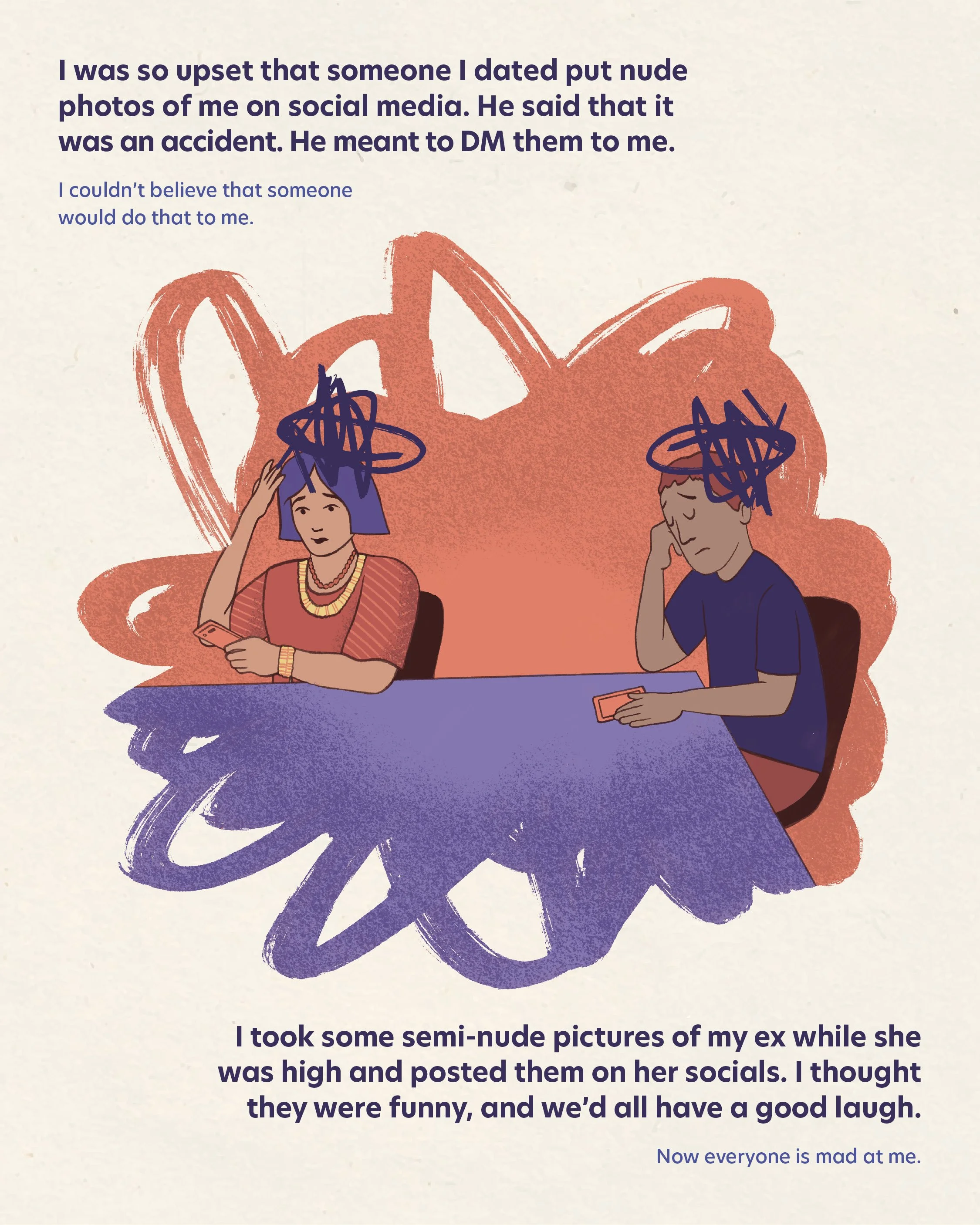
Non-consensual sharing of intimate images isn't a joke. It's abuse.
It can cause deep emotional distress, loss of safety, and long-term damage to someone’s life and relationships.
Intention and impact aren’t always the same.
People don’t always intend harm.
But still—impact matters.
Reflection helps us see both truths at once: what someone meant, and how it felt on the other side.
Understanding impact isn’t about punishment. It’s about awareness.
-
Many assaults involve substances.
Pressuring someone to drink or seeking unwanted contact can be part of patterns that make people feel unsafe, especially in close communities.
Sometimes reflection comes later. And that’s okay.
Reflecting on gray-area behavior doesn’t always begin in the moment.
Many people understand situations only after time has passed, after distance or silence, or after changed behavior.
There’s no deadline for understanding.
Reflection happens when it’s safe to do so.
-
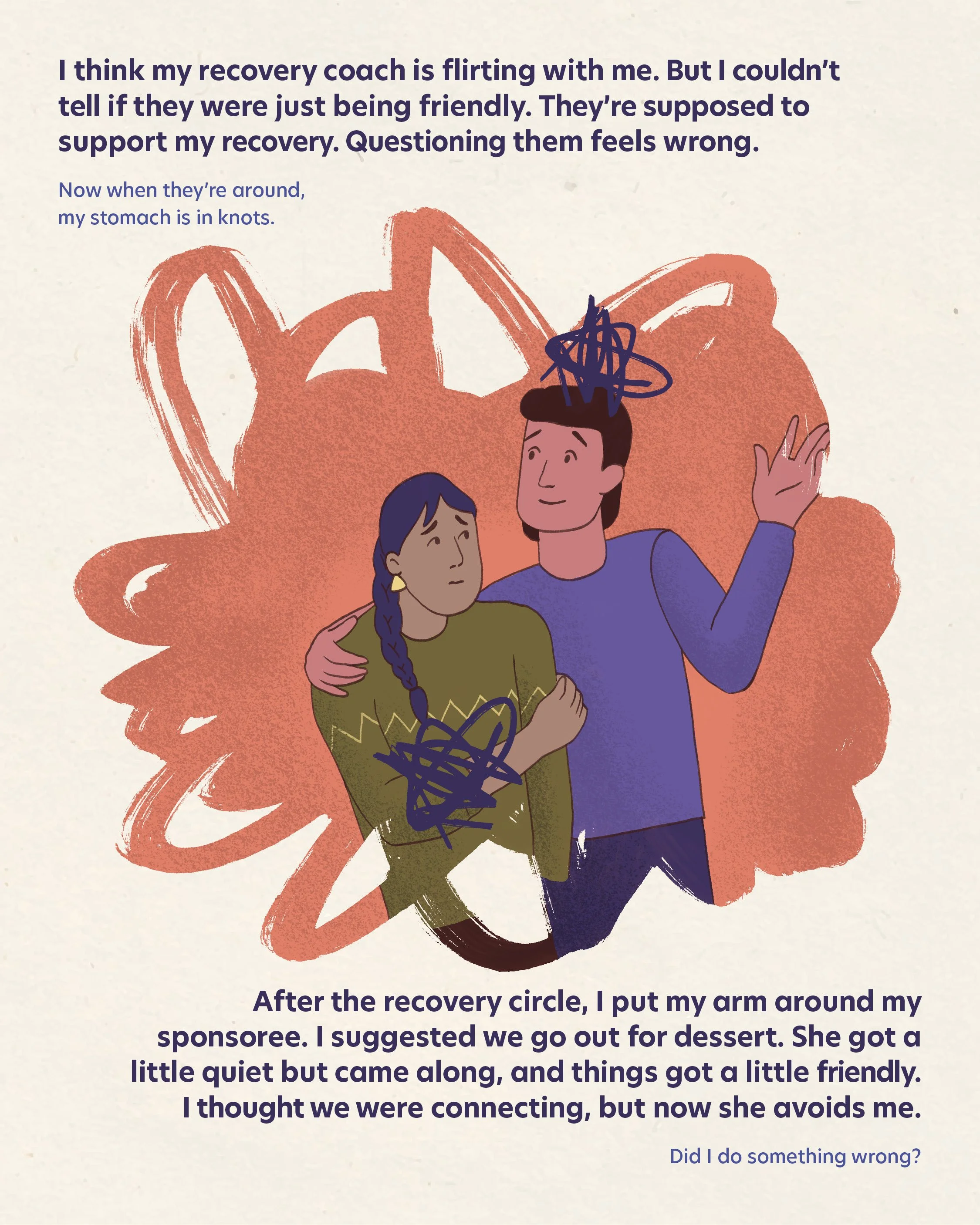
Abuse can often be perpetrated by people in trusted roles.
Coaches, sponsors, and spiritual leaders are among the most common roles where boundaries are crossed and harm occurs.
When respect for someone makes it hard for you to question their behavior.
Reflection can feel hard when there's power, trust, or responsibility involved.
Respect…
Dependence…
Fear of disrupting something important…
These barriers are real and common.
Acknowledging these emotional and cultural barriers is so important for you to feel comfortable thinking about yourself, how you feel, and how you act.
-
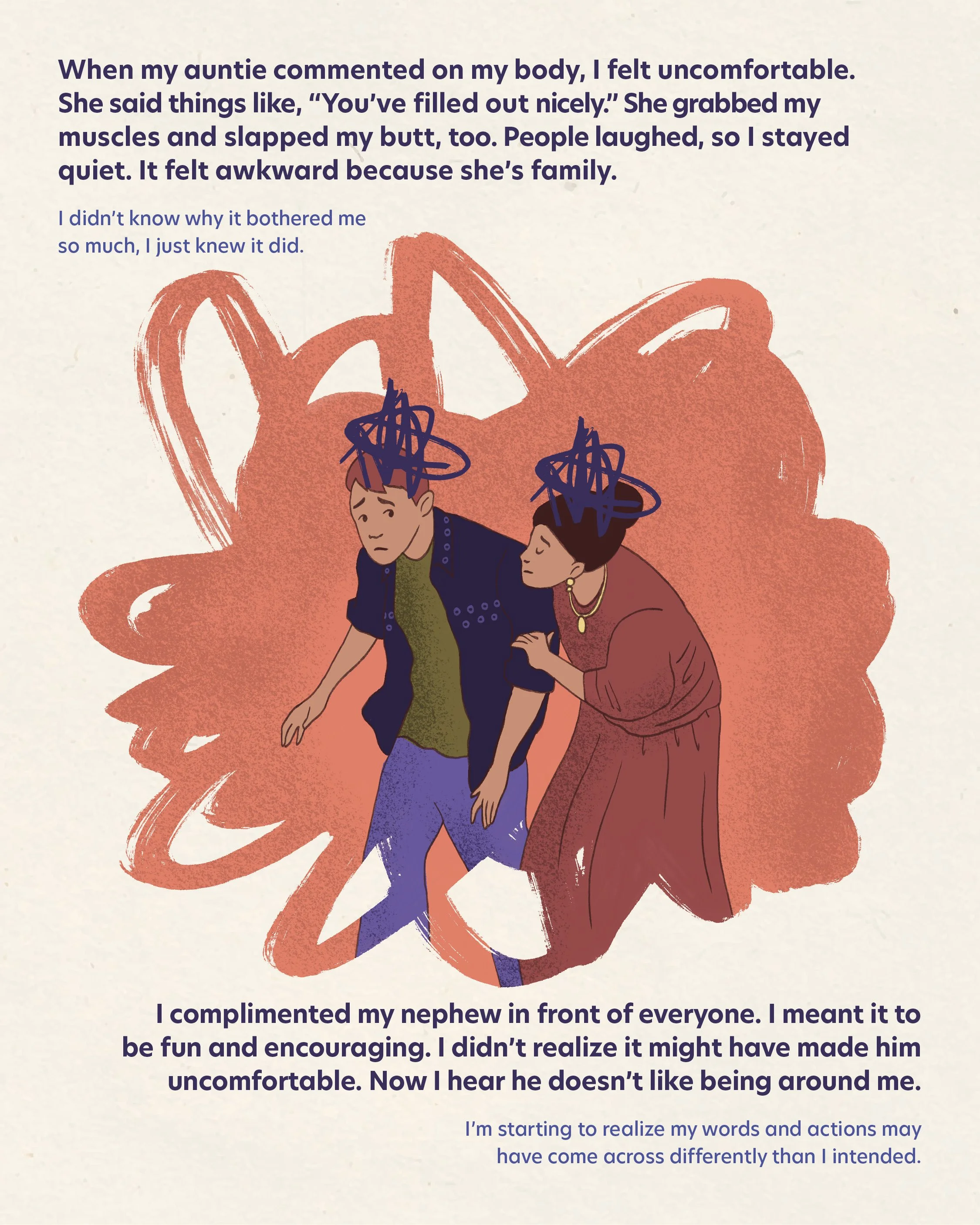
In our tribal communities we often joke around about aunties teasing young men, but every person's body should be respected, and prior consent needs to be obtained before touching. No one should have their bodies grabbed or groped against their will by anyone, including relatives.
Understanding how moments affect others, even when intentions are good.
Reflection is a form of care.
It’s what allows people to pause and consider how their actions affect others, especially in moments where people are silent, pull away quietly, or laugh things off.
Many people don’t say anything in the moment. They freeze, smile, or keep the peace.
Noticing those silences and small shifts in behavior isn't about blaming someone. It's about understanding impact.
Over time, this kind of awareness builds trust, shows attentiveness, and shows that people’s comfort matters, even when it isn’t said out loud.
When reflection is practiced by all of us, shared spaces become safer, more respectful, and more caring for everyone.

Phase 4: Acting with Kinship
Once you've noticed, named, and reflected, the last step is acting. But action doesn't have to be big or dramatic. Sometimes it's leaving a space that doesn't feel right, sitting beside someone who's struggling, or simply asking, "Are you okay?" This phase is about care in motion, and about remembering that we don't have to carry each other's safety alone. In our communities, looking out for one another isn't a new idea, it's something we've always done, and will continue to do.


-
You’re at a public event. Someone keeps calling you “baby,” and something about it doesn’t sit right.
You scan the room, your body feels tense. Then you decide to leave early.
That choice matters.
Taking action doesn’t always look like confrontation. Sometimes it’s about listening to yourself and choosing safety.
Care can be quiet. And it can still be powerful.
-
You notice your friend looks glazed over. They’re quieter than usual.
You lean in and ask, “Are you okay? Do you want to step outside?”
That really matters.
Checking-in doesn’t require the right words or a solution.
It simply lets someone know they’re not alone and that their comfort matters.
It creates space without pressure—space to breathe, to pause, or to leave if they need to.
Sometimes the simplest actions are the most meaningful.
Checking-in is one of the quiet ways we care for each other.
-
When you're at the tribal social, you notice your cousin is sitting down. She doesn't want to dance, and doesn't eat anything.
Sit down with them and see if they need support. Listen to what they say. Stick by them if they need you.
Action is noticing when someone feels uneasy, and it's choosing not to walk away.
Creating safety can include being present or helping change the environment so someone can breathe again.
It shows your loved ones that you have their back.
These actions don’t draw attention or require explanations. But they matter.
Small, quiet acts of just being there remind people they don’t have to feel discomfort alone and that care can exist without words.
-
Boundaries are often talked about as something individuals have to set alone.
But safety isn’t created by ourselves.
Communities shape what’s acceptable, what’s supported, and how people are cared for when something doesn’t feel right.
When we look out for one another by stepping in gently, changing the feeling in a space, or checking-in with someone afterward.
We share the responsibility of keeping each other safe.
Holding boundaries together means no one has to carry the weight by themselves.
It’s a shared act of care.
-
Caring for one another is not a new idea. It’s something that has always lived within our culture, our teachings, and our kinship systems.
Looking out for each other, offering rest, creating space to heal—these are all acts passed down through generations.
At Kinship Heals, support is grounded in this understanding.
Care can be quiet, relational, and rooted in respect. It can happen in community, and it can happen in our office.
It's through words and actions. It's through making time, and finding relief, like coming by and talking with us, or getting on the bio-mat to destress.
When we show up for one another in these ways, we’re not just helping in the moment, we’re honoring who we are and where we come from.
Kinship Heals is here to support collective care.
Reach out today if you need support.